John McKie – Sign o’ the Prince Times
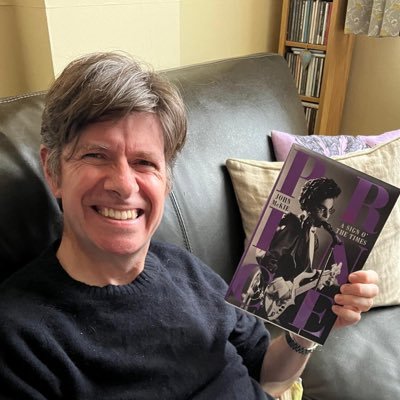
John McKie is the author of the book “Prince: A Sign o’ the Times.” Here is a short description of the book: Built from more than 200 original interviews with friends, ex-girlfriends, bandmates, assistants, engineers, and insiders, this ambitious new biography explores Prince through the lens of his landmark 1987 album Sign o’ the Times. The book offers one of the most intimate and panoramic portraits yet of a famously unknowable artist. Enjoy the interview with John!
1. What first drew you to focus an entire biography on Prince through the lens of the Sign o’ the Times era specifically?
The original plan was to write a book about how Prince created his masterpiece Sign O’ The Times – both double album and movie – speaking to interviewees who worked with him around that era.
Through research, there were two realisations. First, that Prince and the artistic triumphs of that double album (Sign O’ The Times) couldn’t be understood without acknowledging what he had created to build towards Sign, particularly with Purple Rain but the musical apprenticeship started in childhood. After you have researched the early part of the career, and the Sign O’ The Times record, it made sense to find out new facts about later period triumphs like The Rock’n’Roll Hall of Fame guitar solo in tribute to George Harrison and his 2007 Super Bowl show, considered the greatest of all Half Time performances.
Second, through speaking to people throughout his career, and musicians who influenced him, a fuller portrait was necessary. So it made sense to look at the wider career from his parents’ background in music and school talent shows right up unto his final piano-only tour. All these in different ways inform the man who created Sign O’ The Times.
2. You conducted more than 200 interviews for this book. What did that scale of testimony reveal that a traditional single-narrative biography might have missed?
Many music biographies circle around either the personal life, or the musical influence. I wanted this book to give as panoramic a view of Prince as his boundless creativity deserves. He was extraordinary in terms of talent and hard work, but I wanted to cast the net as wide as I could to reveal the man behind the guitar and the piano, what made him laugh, whom he loved and what drove his prolific creativity. I also didn’t want it just to be a view on what it was like being him, but what it was like being around him, as well as where he stands musically. To understand him as a bandleader and in the studio, I worked hard to speak to bandmates of musicians important in his life, such as Miles Davis, Carlos Santana and Joni Mitchell, but also the people around him – the bandmates and engineers in the room when he made his hits, those who helped him construct tours and Paisley Park, and men who made his shoes, house keepers, his fashion team, the people who worked on his famous logo, luthiers who designed his guitars and hair and make-up. Plus of course, friends and ex-girlfriends.
3. Prince is often described as one of the most elusive figures in music history. What were the biggest challenges in trying to reconstruct his life and personality from secondhand accounts?
Many! Some didn’t see the upside in sharing their stories because they were understandably reticent about opening up to someone they didn’t know, wanted to write their own book (I welcome these!) or perhaps felt beholden to him or his Estate even after his passing. So I remain grateful to all those kind enough who did. Towards the end of research, I got to describing the book as a patchwork quilt which would build a portrait of him. As singer Ani DiFranco said, he is remembered ‘by each person in their own way. He offered a rainbow and you pick your own frequency.’ Some interviews are negative about their experience with him, others positive. It is important both viewpoints were reflected.
4. Did you notice major contradictions between how different people remembered Prince? How did you decide which versions of events to trust or emphasize?
Any important facts (for instance the revelation that Prince and Michael Jackson planned to work together years about Prince turned down the Bad duet) I made sure more than one interviewee corroborated. Prince himself sometimes threw journalists off-course in the rare interviews he did, so for those close to him, I would ‘sense check’ if they felt the interviews (such as one he gave Guitar Player in 2004) were an adequate representation of his general point of view. In addition, various themes emerged over a series of interviews. It got to the point when an interviewee would start an anecdote, I would think “oooh, Prince wouldn’t have liked that.” I tried where possible to reflect consensus views on Prince as well as interesting individual interactions, and be fair not just to him but to everyone kind enough to share memories.
5. What does Sign o’ the Times represent to you personally, as a journalist and as someone studying Prince’s creative peak?
It’s foundational for me. As the music of James Brown, Earth, Wind & Fire, Joni Mitchell and Fleetwood Mac was to Prince growing up, for me, Sign O’ The Times is the best way for anyone young or old to understand the breadth and individuality of Prince’s music – and the most artistically ambitious record of the MTV era. For someone my age, Prince, Madonna and Michael Jackson were all born in the same year in the Mid-West and the ‘80s pop scene was in many respects defined by them. While Madonna and Michael Jackson both made grear records, I’d go as far as to say, Prince being remembered through his biggest selling record Purple Rain is unfair because Sign O’ The Times displays his artistic fearlessness and depth of vision more fully. Purple Rain is a high watermark, but Sign… feels higher, and as a journalist, a better story too. He split up with the woman he thought he would marry and the band with whom he enjoyed his greatest commercial success and went on to deliver his ultimate masterpiece. Who does that? Prince did.
6. Through your research, what new insights emerged about Prince’s creative process, especially his reputation for sleepless recording sessions and extreme productivity?
Working with Prince was not for the faint-hearted. As much as I admired him before this book, I emerged after research and writing, with a greater appreciation of his talent, but also for the patience, dedication and creativity of many of his colleagues in music, fashion, management, and those who stayed the distance as friends and romantic partners. One employee had to repair the back of his car because he wanted it reassembled so the speaker system at the back played his own music louder.
7. How did Prince’s desire for artistic control shape both his music and his relationships with the music industry during this period?
Sign O’ The Times was to be a triple before it became a double. The same year, Prince had Paisley Park be opened, junked an album – the most bootlegged of all time – at the last minute, put together a jazz album (largely on his own), rushed out a live concert movie and worked with Bonnie Raitt, George Clinton and Miles Davis.
The era was the start of another great artistic leap forward but also the beginning of the end of his relationship with his record label as well as the birth of a new band. The book is full of stories which display his ruthlessness in moving on colleagues and executing his vision, ability to live in the moment to ensure the best music, and control over how he looked, what he ate and wore, and the shows and albums he produced. Subsequent behaviour, also detailed in the book, showed how brave he could be selling his music online before anyone else thought it was possible, ditching his own name and developing his own logo.
8. Your interviews include a wide range of people, from close collaborators to personal assistants and bodyguards. Which perspective offered the most surprising or humanizing view of Prince?
His make-up artist Robyn Lynch told me about the time he was short with her about a shade of green make-up which reflected not just an attention to detail – several interviewees made that apparent – but also that he could say sorry in his own way on occasion. I was personally pleased ex-girlfriends shared thoughts about their time with him as it showed him to be funny, occasionally possessive, vulnerable, playful and elusive, among other adjectives, They seemed to get to know him as well as anyone, as Prince loved women, promoted women and stayed friends with some if not all of his exes.
9. What did you discover about Prince’s relationships with other major artists like Michael Jackson, Madonna, or David Bowie that hasn’t been widely discussed before?
Tonnes. He expressed a deep love for Michael Jackson at both the start and the end of his career, and they nearly worked together. He also had a huge amount of respect for Madonna when they worked together, and the book details the party he threw for David Bowie when David’s Glass Spider tour visited Minneapolis. It sounds like a party we would all love to have attended. The boxing legend Sugar Ray Leonard was there, and a battle between Prince’s and David’s troupes of dancers broke out at the end.
10. After completing this extensive research, do you believe Prince is ultimately more knowable now—or does he remain the “last great pop mystery”?
There are some facts in this book which make Prince normal, and others where he is clearly exceptional. The aim was for the reader who reads the 500-plus page book to know Prince a good deal more than they did when starting, be that reader a die hard fan or a music fan fresh to his work. I’d particularly love today’s musical creatives to be inspired by it, and realise what’s possible. Prince was endlessly ambitious. The important thing for me through the whole process was to be fair to him (as he is not around to answer any claims) but also to those around him. In terms of his mystery, even after 220 interviews and extensive research, sometimes you are able to clear things up, but on other occasions, you have to respect that Prince’s mysteriousness – very much by his own design – will endure.
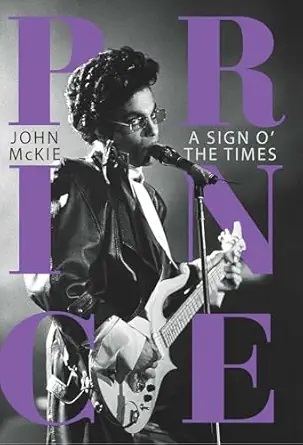
Order the book here: https://www.amazon.com/Prince-Sign-Times-John-McKie/dp/B0GT9WB91K